How to Store Waterproofs (Without Killing the Membrane)
As an Amazon Associate we earn from qualifying purchases. This page contains affiliate links — if you buy through them, we earn a small commission at no extra cost to you.
Sustained compression can crack a membrane’s bond in under a year, while UV exposure degrades fabric coatings even in storage. These two conditions destroy waterproof gear faster than regular use.
The usual assumption when a jacket feels stiff or tacky is that the membrane has failed. More often, it’s been slowly degrading in poor storage conditions. Proper storage is the cheapest way to extend a jacket’s life by years, while mistakes can cost hundreds in replacements.
How Storage Conditions Damage Waterproof Kit
When waterproof gear fails in storage, two main mechanisms are usually to blame: hydrolysis and creasing. Understanding which affects your kit helps you choose the right storage method.
Hydrolysis occurs when moisture reacts with polyurethane coatings over time, breaking down the polymer chains. The fabric stiffens, the coating may feel tacky, and waterproofing fails because the coating itself degrades. This explains why budget jackets and tents often “go to pot” after a couple of years in a damp garage. Heat accelerates the process—a damp garage or hot loft is exactly the wrong environment for PU-coated kit. Fabrics like Gore-Tex don’t hydrolyse the same way and generally last longer in storage, though they can still delaminate with age or under sustained pressure.
Creasing stresses the membrane bond. Tight folding creates sharp creases that can crack or delaminate the thin bonded layer over months. The damage might not be visible externally—just a fabric wrinkle—but the membrane underneath can be compromised along that line. This is why jackets stuffed into drawers or rolled under heavy items fail at the fold marks.
Biological factors also play a role. Dirt, sweat, or organic material left on fabric feeds mildew, which permanently degrades both face fabric and coating. A jacket worn on a sweaty hike and stored unwashed is halfway to a problem.
Before storing any kit, check for musty smells, stiffness, or damp patches in folds. If present, wash it first. The wash-then-reproof order applies to storage prep as much as maintenance.
Storing Shell Jackets: Hang or Fold?
The best method depends on your waterproof’s construction and available space.
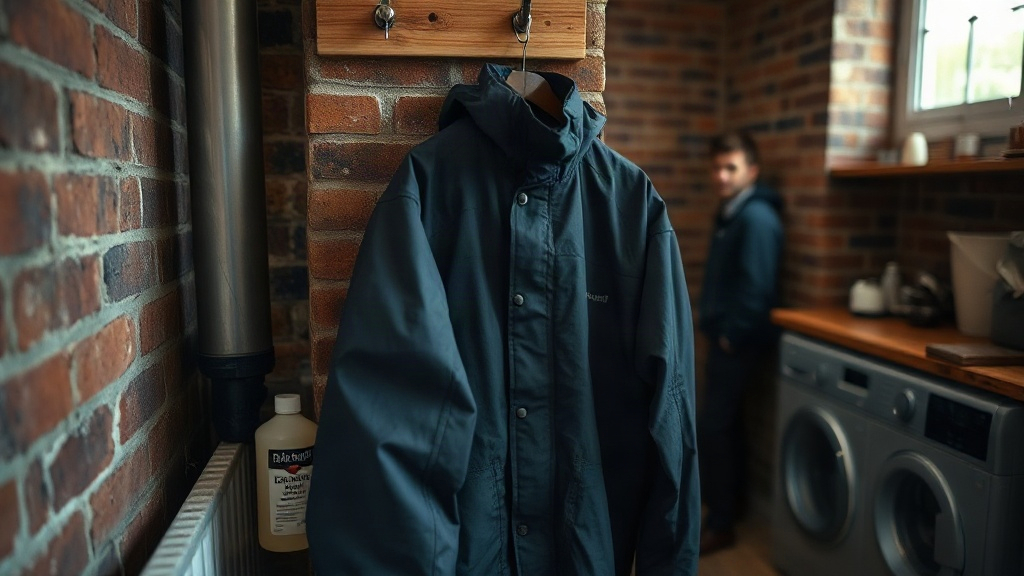
For membrane shells (Gore-Tex, eVent, Pertex Shield), hanging on a wide, padded hanger is ideal. This distributes weight across the shoulder section, the most vulnerable area. Wire hangers concentrate pressure at the shoulder seam. If you only have wire hangers, fold the jacket loosely across the bar instead of draping it. Zip closures help the jacket maintain its shape.
For PU-coated gear (many budget waterproofs, overtrousers, tent flysheets), hydrolysis risk makes the storage environment more critical than hanging versus folding. Loose rolling is still better than tight folding. If folding, do it loosely, vary the crease points, and ensure a dry environment.
Store gear in a cool, dry, well-ventilated room. A damp garage or unventilated loft in summer are the environments most likely to accelerate failure. If these are your only options, a breathable cotton or mesh garment bag beats a sealed plastic bag, which traps moisture and encourages hydrolysis and mildew.
For long-term storage, clean gear first. Nikwax Tech Wash (paid link) or Granger’s Performance Wash (paid link) are specialist cleaners that remove oils and grime without damaging membranes. It’s a fifteen-minute job that ensures you’re storing a clean jacket, not one sealed with body oils and sweat.
Check Granger’s Performance Wash price → (paid link)
See Nikwax Tech Wash on Amazon → (paid link)
Storing Down Insulation
Down insulation faces different challenges: damp and compression are the primary enemies.
Damp down clumps together, losing loft—which means losing warmth. A clumped sleeping bag becomes a cold one. Store down gear in a dry place. If it gets damp, dry it thoroughly before storage. If the care label allows, a tumble dryer on low heat with clean tennis balls can help break up clumps.
Compression is equally damaging. A down jacket stuffed under a pile of clothes loses loft over weeks as the fill compresses and fails to recover. For long-term storage, hang down gear loosely or store flat in a mesh bag that allows air circulation. Compression bags are for travel, not storage.
A musty smell in old sleeping bags usually indicates damp storage. Airing them out once a season for a few hours in dry air helps maintain condition.
Storing Tents and Tarpaulins
Tent storage follows similar principles to jackets, but PU hydrolysis is often more acute due to larger coated surface areas.
Clean and completely dry before packing away. Dirt left on fabric anchors mildew, permanently damaging the coating. After a wet trip, ensure the tent has several dry days before storage. Dry it at home if uncertain.
Roll loosely, don’t fold. Folding creates sharp creases across wide areas. Roll fabric-side out without pulling tight—over-tight rolling creates the same stress points as folding.
UV exposure degrades fabric even in storage. Keep the tent in its storage bag in a dark, dry place. A damp garage in direct sunlight combines the worst elements: warmth, moisture, and UV.
Before seasonal storage, check seams and flysheets for mildew spots or discolouration. Early detection allows treatment with diluted specialist cleaner and thorough drying before permanent damage occurs.
Common Storage Questions
Can I use a plastic bag for storage?
Avoid sealed plastic bags—they trap moisture and prevent breathing, accelerating hydrolysis and mildew. Use breathable cotton or mesh bags, or hang jackets openly in a dry room.
Should I wash gear before summer storage?
Yes. Sweat, body oils, or grime left on fabric degrade waterproofing and feed mildew over time. A technical wash with Nikwax Tech Wash (paid link) or Granger’s Performance Wash (paid link) removes contaminants without damaging membranes. Dry completely before storage.
Does storage temperature matter?
Extreme cold doesn’t damage membranes, but heat and humidity do. Hot attics or damp garages accelerate PU coating degradation. Aim for a cool, dry, well-ventilated room.
When should I reproof?
Reproof as needed, depending on wear and water beading. If water no longer beads on the fabric—appearing dark and wet after rain—it’s time to reproof. Wash-in proofers like Nikwax TX.Direct (paid link) or Granger’s Clothing Repel (paid link) offer thorough coverage.
Check Granger’s Clothing Repel price → (paid link)
Check Nikwax TX.Direct price → (paid link)
Hanging or folding jackets?
Hanging on a wide, padded hanger is best. Folding creates crease lines that stress membranes and cause delamination over time. If space requires folding, do it loosely and vary the fold lines.
Storage Environment Guide
| Item | Ideal Conditions | Key Risk | Best Storage Method |
|---|---|---|---|
| Membrane Shells | Cool, dry, ventilated | Hydrolysis, Creasing | Wide padded hanger |
| PU-Coated Gear | Cool, dry, ventilated | Hydrolysis | Loose roll or hang |
| Down Gear | Cool & dry | Damp, Compression | Mesh bag, loose hang |
| Tent Flysheets | Cool, dark, dry | Mildew, UV | Loose roll, dark place |
Your End-of-Season Storage Checklist
For shells, down, and tents alike, the universal storage configuration is loose, dark, and dry. Keep gear loosely stored away from light in a dry environment. Follow this end-of-season storage checklist to protect your investment:
- Clean thoroughly with appropriate technical wash
- Ensure complete drying before storage
- Store loosely—hang or roll without sharp creases
- Choose a cool, dark, dry location
- Avoid plastic bags—use breathable storage
- Check periodically for signs of moisture or mildew
Once storage is sorted, proper washing and reproofing routines ensure maximum lifespan. A clean, well-reproofed jacket stored correctly lasts years longer than neglected gear.
Get the Free Waterproof Care Checklist—a one-page guide to the wash, reproof, and storage sequence that keeps decent kit going for years instead of seasons.
More Storage Guidance
For trousers-specific storage considerations, see Waterproof Trousers Care: Same Rules, Different Wear .
Sources & Further Reading
As an Amazon Associate we earn from qualifying purchases.
Note: General guidance only, verify details with a qualified professional or official source.