Can Your Leather Boots Survive a Wet Walk? (The Wax vs Spray Truth)
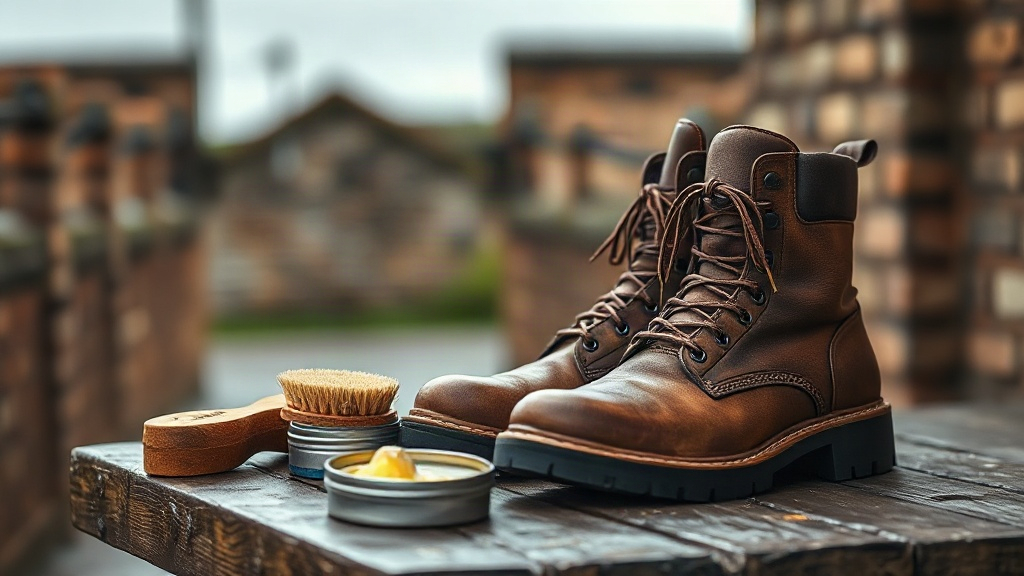
As an Amazon Associate we earn from qualifying purchases. Some links on this page are affiliate links, which means we may earn a small commission if you make a purchase.
Untreated full-grain leather is far more porous to moisture than the same leather once waxed — that gap is why a spray-on proofer applied to dry leather achieves a fraction of the protection of wax. Spray forms a brittle surface layer that cracks under flex, while wax melts into the pores to create a flexible, durable barrier that moves with the boot.
Most of what the outdoor world tells you about waterproofing leather boots is written for synthetic fabric shells—and leather isn’t a synthetic fabric. It’s a porous natural material that behaves completely differently, which means the spray-on shortcut most people reach for isn’t just less effective: it actively sets you up for damp feet and cracked leather the next time a proper rain comes.
Understanding Leather’s Porous Nature
Leather’s pores allow it to breathe, letting moisture vapour escape outward, which is why leather can handle warm, sweaty feet without turning into a plastic bag. But those same pores let water in from the outside when the surface treatment fails. Synthetic fabrics like Gore-Tex and nylon work differently: they have a tight woven structure that relies on a surface coating—the DWR finish—to bead water before it reaches the membrane underneath.
The problem with treating leather like a shell is that you end up using the wrong product for the wrong material. A spray-on proofer designed for synthetic fabrics forms a film on the surface. It works fine until the leather flexes as you walk. Then it cracks. Then water finds the gaps.
This is a familiar pattern: someone sprays their boots, they’re fine for a week, but after a longer or wetter walk than usual, the water soaks straight in. The spray hasn’t failed because it was applied badly; it’s failed because it was never the right product for the job.
If you already understand the distinction between a membrane and a DWR finish from looking after a waterproof jacket, the same logic applies here: you’re not trying to restore a surface coating on leather, you’re trying to penetrate and condition the material itself. One product does that. One doesn’t.
Related Guides
For a complete overview, see our Waterproof Trousers Care: Same Rules, Different Wear .
For more on how this works in the membrane layer of your outdoor kit, the waterproof jacket care guide covers the underlying principle.
Two Approaches to Proofing Leather
There are two approaches on offer, and they work in fundamentally different ways.
Wax-based treatment melts into the leather when applied warm. Nikwax Waterproofing Wax for Leather (paid link) is the tin most UK walkers will recognise.
Buy Nikwax Waterproofing Wax for Leather on Amazon → (paid link)
Granger’s Waterproofing Wax (paid link) (100 ml) is the Granger’s equivalent — not a third-party tin sold as “G-Wax”.
View Granger’s Waterproofing Wax on Amazon → (paid link)
Meindl Sportwax (paid link) (80 g jar) is the boot-maker’s own wax. All three fill the pore structure and stay flexible as the leather flexes during walking. They also condition the leather, keeping it supple rather than letting it dry out and crack. The trade-off is that application takes more time than a spray, and the smell is pungent until it dries.
Check Meindl Sportwax price → (paid link)
Water-based spray-on proofer (found next to the walking section in most outdoor shops) is designed for synthetic fabrics. It sits on the surface and forms a barrier there. It’s fast to apply and it works—for a while. But it doesn’t condition the leather, and because it forms a rigid film rather than penetrating the pores, it cracks when the boot flexes underfoot. The beading effect looks good when fresh, but owners who’ve tried it report that it feels stiff rather than supple once dried. For light, infrequent use, it can serve as a surface-renewal tool. For regular UK walking, it leaves gaps.
Both products need the boots to be clean before application—dirt and mud on the surface will stop either one from working properly. That step is non-negotiable.
Why Wax Wins (And When Spray is Acceptable)
Spray-on proofer is designed for synthetic fabrics, not leather. That’s the core issue. It sits on the surface without penetrating the pores, so when water pressure builds up—a stream crossing, a long wet descent, a full day in persistent rain—it has nothing to push against except a rigid film that cracks under the first decent flex. Wax, by contrast, melts into the pore structure of the leather and stays flexible. The barrier moves with the leather as you walk, holding up through repeated flexing rather than breaking down after a few wears.
The other job wax does that spray doesn’t: conditioning. Leather that isn’t treated regularly dries out and becomes brittle. Brittle leather cracks. Cracked leather doesn’t just look rough; it lets water in through the cracks, and at that point you’re not dealing with a proofing problem, you’re dealing with structural damage. Wax keeps the leather supple over time, which is why the Meindl care guide describes it as extending the life of seams and hooks as well as the leather itself1.
For UK walkers who use their boots regularly—the weekend routes, the muddy paths, the Peak District in November—the cost of getting this wrong is damp feet on a long walk and a pair of boots that deteriorate faster than they should. Nikwax Waterproofing Wax for Leather (paid link) sits around £10–£15, and a tin lasts for months. The maths isn’t complicated.
Spray-on proofer is acceptable in only one situation: light use, pavement walks, dry weather, and a pair of boots you don’t particularly mind replacing sooner rather than later. If that sounds like your situation, fine—but be honest about it. For anyone who actually walks in the British hills with any regularity, wax is the call.
Now you know what the difference is and why it matters—get the Free Waterproof Care Checklist to keep your kit in check.
Applying Wax to Leather Boots
Clean the boots first. Remove the laces, brush off any dried mud with a soft brush, and use a boot cleaner or warm water with a clean cloth. Don’t use ordinary detergent—it can strip the leather’s natural oils and leave it drier than before you started. Let them dry naturally, away from direct heat.
Warm the leather slightly before waxing. Standing the boots near a radiator for a few minutes does the job—warm leather absorbs wax better than cold leather. Apply the wax in small circular motions using a sponge, cloth, or your fingers. Work it into the seams and any flex points where water is most likely to get in.
Buff off the excess once it has absorbed—usually after about 20 minutes—with a clean brush or cloth. The boots should look clean and slightly darker where you’ve applied the wax, not coated.
Let them dry fully before wearing in wet conditions. Overnight is ideal.
The step most people skip is cleaning first. Wax applied over mud sits on top of the dirt and doesn’t penetrate—it just flakes off. That single mistake is behind most of the complaints you’ll see about wax not working.
Common Mistakes to Avoid When Proofing Boots
The biggest mistake is applying proofing of any kind to dirty boots. The product needs direct contact with the leather to work. Mud is a barrier. Clean first, always.
Using the wrong type of spray is the other common error. A spray-on proofer formulated for synthetic fabrics won’t penetrate leather pores. It will form a rigid surface film that cracks when the boot flexes. You’ll see the beading effect initially, then watch it disappear after a few wears. This isn’t a quality issue with the product; it’s a mismatch between the product and the material.
Over-waxing is a less serious mistake but still worth flagging. A thick, heavy coat makes the leather stiff and can affect the fit until it breaks in again. Two thin coats applied seasonally is better than one thick coat applied once.
Using heat to dry boots causes the most irreversible damage. Direct sunlight, a radiator, or a boot dryer on a hot setting causes the leather to dry too quickly and crack2. Stuffing boots with newspaper and leaving them in a cool, ventilated spot is the safer approach—it draws out moisture gradually.
Frequently Asked Questions
Can I use fabric waterproofing spray on leather boots?
No. Fabric spray is formulated for synthetic materials and won’t penetrate leather pores. The rigid film it leaves behind cracks when the boot flexes during walking, which is exactly when you need the waterproofing to hold.
How often should I wax my leather boots?
After every few months of regular use, or as soon as water stops beading off the surface. If you’re wearing your boots regularly through a wet British winter, that might mean a couple of times a season. If it’s more occasional use, once before the wet months is usually enough.
Will wax make my boots waterproof if they have a membrane?
Yes—and it helps the membrane work properly. The outer leather layer needs to shed water so the membrane can do its job of moving moisture vapour outward. If the outer leather is saturated, the membrane has to work harder and breathability drops significantly.
Is it better to use a cream or a wax for leather?
Wax is generally better3. It penetrates the pore structure and provides a flexible, durable barrier. Creams can condition the leather but tend to sit on the surface.
Can I machine wash my leather boots?
No. Full immersion in a washing machine can damage the leather and affect the adhesives holding the sole unit in place. Hand cleaning with a brush and cloth, or a dedicated boot cleaner, is the safer approach.
Comparing Wax and Spray Treatments
| Feature | Wax Treatment | Spray Proofer |
|---|---|---|
| Application | Melts into pores, flexible | Forms surface film, rigid |
| Conditioning | Yes, keeps leather supple | No, can dry out leather |
| Durability | Long-lasting, flexible | Cracks under flex |
| Best For | Regular UK walking | Light, occasional use |
| Cost | £8–£15 per tin | Varies by brand |
Final Steps and Precautions
The one mistake that voids wax protection fastest is applying it to warm leather straight from a radiator. The ideal temperature range for waxing is 10–15°C—warm enough to aid absorption but not so hot that the wax melts unevenly or the leather dries out.
Leather walking boots aren’t a small investment. Protecting that investment with the right treatment—and only about £10 worth of wax—is one of the easier calls in outdoor kit care. Have a look at the Free Waterproof Care Checklist for a quick reference you can keep handy.
Note: General guidance only. Always verify specific product instructions and consult a qualified professional or official source for detailed care requirements.
Meindl says wax should be applied to metal hooks and eyelets to help prevent corrosion and recommends regular waxing. Source: https://meindl.de/service/care/?lang=en ↩︎
Meindl advises boots should dry slowly in a room-temperature, low-humidity area and warns against warming wax. Source: https://meindl.de/service/care/?lang=en ↩︎
Meindl explicitly says leather needs regular waxing, and Nikwax’s wax product is designed for smooth leather. Source: https://meindl.de/service/care/?lang=en ↩︎