How to Keep Gloves Waterproof (Without Buying New Ones)
As an Amazon Associate we earn from qualifying purchases. Some links on this page are affiliate links, which means we may earn a small commission if you make a purchase.
The palm, index finger, and thumb web of a glove have the highest surface-area-to-wear-contact ratio, which makes them lose their DWR (Durable Water Repellent) coating faster than any other item of outdoor kit. This anatomical reality is why gloves fail first, leaving your hands vulnerable to rapid heat loss.
Most people prioritise jacket care while neglecting their gloves, which face the same DWR degradation. When gloves wet out, the consequences are more immediate—hands are not a large muscle group you can keep moving to generate heat. Reproofing small items like gloves is a safety step, not a luxury, and it’s one of the easiest wins in your kit care routine.
Why Wet Gloves Become Dangerous
Water conducts heat away from the body roughly 23 times more efficiently than air. According to thermal conductivity tables, water sits at around 0.6 W/mK while air is around 0.026 W/mK.1 When your glove’s face fabric saturates, your hand loses heat at a rate that compounds quickly, especially in wind or when static on a summit. If you’ve ever felt your fingers go numb within minutes of taking off wet gloves on a cold ridge, that’s the heat loss kicking in—exactly what a functioning DWR layer prevents.
A DWR coating on the outer fabric causes water to bead and roll off rather than soaking in. This keeps both the outer layer and the insulation dry. Once the DWR is dirty or worn—which happens faster on gloves due to frequent handling and skin oils—water soaks the face fabric, and the insulation underneath starts conducting heat away instead of trapping it.
Most ski and mountaineering gloves use a Gore-Tex or equivalent membrane. This membrane usually remains intact even when the outer fabric has wet out; the failure is typically in the DWR, not the membrane itself. The practical fix is reproofing the outer fabric, not replacing the glove. Spray-on proofer works well for gloves because it allows targeted application without soaking the insulation inside—a crucial advantage since soaked glove insulation takes far longer to dry than jacket insulation.
Choosing Between Overmitts and Shell Mitts
If you’re considering new handwear, the distinction between waterproof overmitts and shell mitts involves genuine trade-offs rather than just marketing.
Waterproof overmitts feature a waterproof inner layer and a DWR coating on the face. They pack small, often include wrist loops for easy handling, and some have reflective elements for low-light visibility. For sustained heavy rain—like on a Scottish hillside in November—they’re the more reliable choice. The waterproof inner acts as a physical barrier, so even if the outer face eventually wets out, your hands stay dry.
Shell mitts serve a different purpose. Designed as an outer warming layer worn over existing gloves or liners, they prioritise warmth and dexterity over full waterproofing. Weather-resistant polyamide handles wind and snow effectively, and a long cuff extending over your jacket sleeve prevents drafts. They’re better suited for snow sports—ski touring, winter climbing, or days with frozen precipitation—because they add warmth without trapping moisture the way sealed overmitts can during high exertion.
The honest trade-off: waterproof overmitts excel in rain; shell mitts win on warmth and dexterity. For UK hillwalkers, the decision hinges on whether you’re more likely to encounter horizontal rain or cold, dry wind. If you already own decent gloves, reproofing them is usually the right first move. Waterproof overmitts make sense as a supplement—a shell for deteriorating conditions—rather than a replacement for proper base layer maintenance.
Reproofing Your Gloves Step by Step
Follow the same wash-then-reproof sequence used for waterproof shells, scaled for smaller items.
Start by checking the care label. Close all Velcro tabs and zips, and confirm whether machine washing and tumble drying are permitted. Some gloves cannot handle tumble dryer heat, which may damage membranes or bonding. When in doubt, air dry.
Wash first using a dedicated tech wash like Nikwax Tech Wash (paid link) or Granger’s Performance Wash (paid link) on a gentle cycle. Ordinary detergent leaves residues that clog fabric pores and prevent new DWR from bonding properly. Fabric softener is worse—it coats fibres with compounds that make water spread rather than bead. Use a small amount of liquid tech wash only—no powder, softener, or bleach.
Check Granger’s Performance Wash price → (paid link)
View Nikwax Tech Wash on Amazon → (paid link)
Both Nikwax and Granger’s products are formulated specifically for technical fabrics. The key limitation is that neither restores factory-level DWR on its own; the separate reproofing step remains essential.
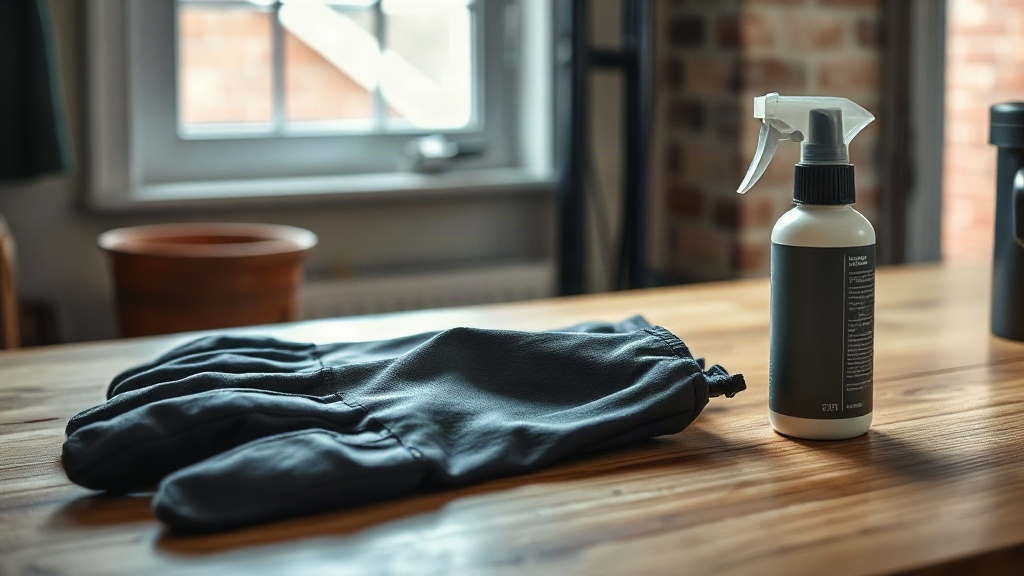
Once clean and rinsed, dry the gloves—air dry or tumble dry on low if permitted. Then apply DWR using a spray-on proofer like Nikwax TX.Direct Spray-On (paid link) (300 ml) or Granger’s Performance Repel Plus (paid link) (500 ml) to the outer fabric only. Allow to dry fully, then heat-activate if the label recommends it (low tumble dry or warm iron with a cloth barrier). Spray-on application targets the outer shell without saturating the interior insulation.
Check Granger’s Performance Repel Plus price → (paid link)
Check Nikwax TX.Direct Spray-On price → (paid link)
Avoid wash-in reproofers for gloves entirely. Submerging the whole garment risks soaking the insulation and membrane, creating a drying challenge that outweighs any convenience.
Common Care Mistakes and Their Solutions
Using standard household detergent or fabric softener is the most frequent error. The surfactants in regular detergent leave residues that promote wetting out, while fabric softener coats fibres with compounds that actively repel water-beading. After one cycle with softener, a glove that beaded well will wet out in light rain.
Overloading the washing machine is another common issue. Gloves need room to move in the drum so water and detergent can flush through properly. Cramming too many items in prevents proper cleaning and rinsing.
Ignoring care label instructions carries risks. Some gloves cannot be tumble dried at all, while others handle low heat only. Tumble dryer heat can reactivate remaining DWR but cannot replace worn-away coating. If the label says no tumble drying, air dry only.
DWR on gloves degrades over time with use and washing. When water no longer beads on the surface—when fabric looks dark and soaked after brief rain exposure—it’s time to reproof. At this stage, some people mistake condensation for a leak. If the outside beads after reproofing but the inside feels damp, that’s usually sweat management issues rather than membrane failure. The fix involves layering adjustments—thinner liners, venting cuffs—rather than assuming waterproofing has failed.
Your Questions Answered
Can I machine wash ski gloves?
Yes, if they’re labelled machine washable—most are. Use a dedicated tech wash on a gentle cycle, avoid powder detergent and fabric softener, and follow care label drying instructions. The wash-then-reproof sequence applies exactly as with jackets.
When should I reproof my gloves?
Reproof when water stops beading on the face fabric, or if gloves take longer to dry than usual. If the outer fabric looks saturated after light rain, the DWR is failing—reproof before you’re caught in poor conditions.
What distinguishes waterproof from water-resistant gloves?
Waterproof gloves have a membrane layer (usually Gore-Tex or equivalent) that blocks liquid water even under pressure. Water-resistant gloves rely on DWR coating to bead water, but some penetration occurs in heavy or prolonged rain. For UK hillwalking in sustained rain, the membrane option justifies the extra cost.
Matching Reproofer Format to Glove Type
The right reproofer depends on your glove’s construction. Leather-palm work gloves need a spray-on proofer that won’t stiffen the leather. Full softshell gloves respond well to spray-on treatments that renew beading without compromising breathability. Hardshell overmitts with membranes benefit most from spray-on applications that target the outer fabric without soaking the interior.
For quick reference on which product suits your specific kit, Get the Free Waterproof Care Checklist . It covers the exact steps for gloves and overmitts alongside jacket and trousers maintenance.
Related Guides
As an Amazon Associate we earn from qualifying purchases. The products linked above are ones we recommend based on independent research.
Note: General guidance only. Always verify specific care instructions with the garment manufacturer.
Thermal conductivity values from engineering reference tables. USED: opener=anatomical-failure-zones; closer=construction-type-to-reproofer-mapping; structure=8→7 (folded DWR lifespan into care mistakes); geometry=fit-by-scenario ↩︎